The idea was dead simple: in 10 clicks, you create a chat widget for your website. Your visitors ask questions through it. You answer from Telegram. No need to sit in some admin panel all day — just reply from your phone like a normal chat.
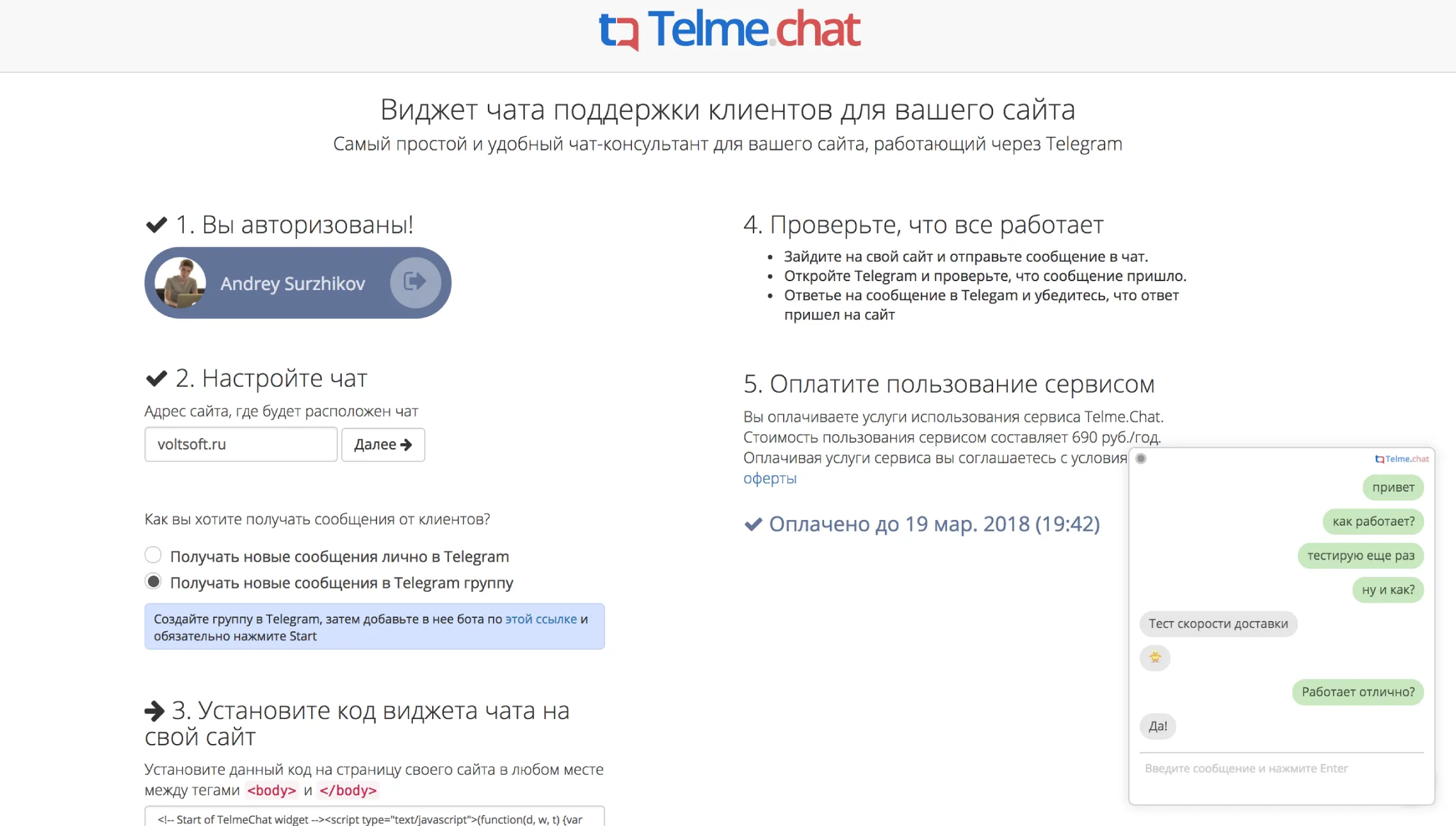
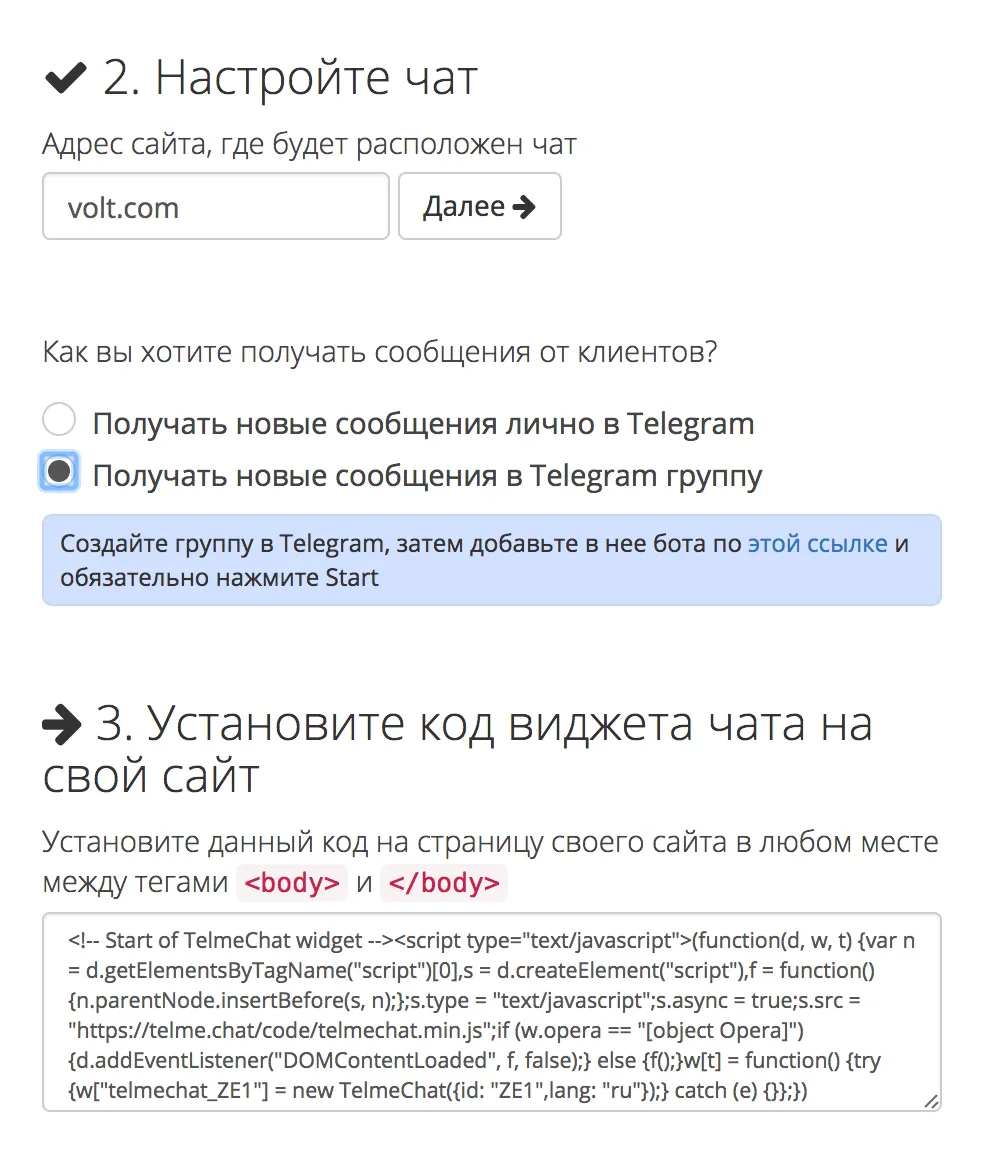
The setup flow was designed to be brainless. Step 1: sign in. Step 2: enter your website URL. Step 3: choose how you want to receive messages — personal Telegram or a group. Step 4: paste one line of code into your site. Step 5: there is no step 5. You're done. The widget was already working on your site.
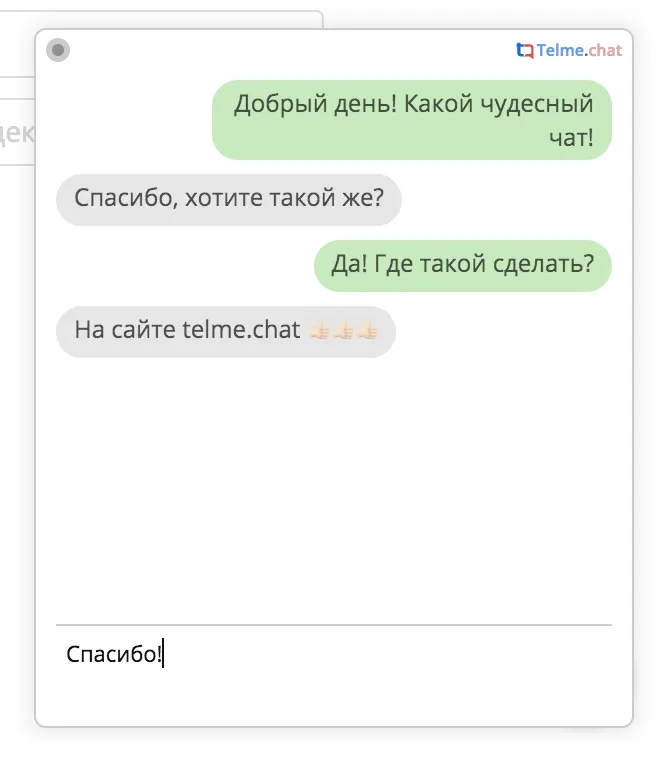
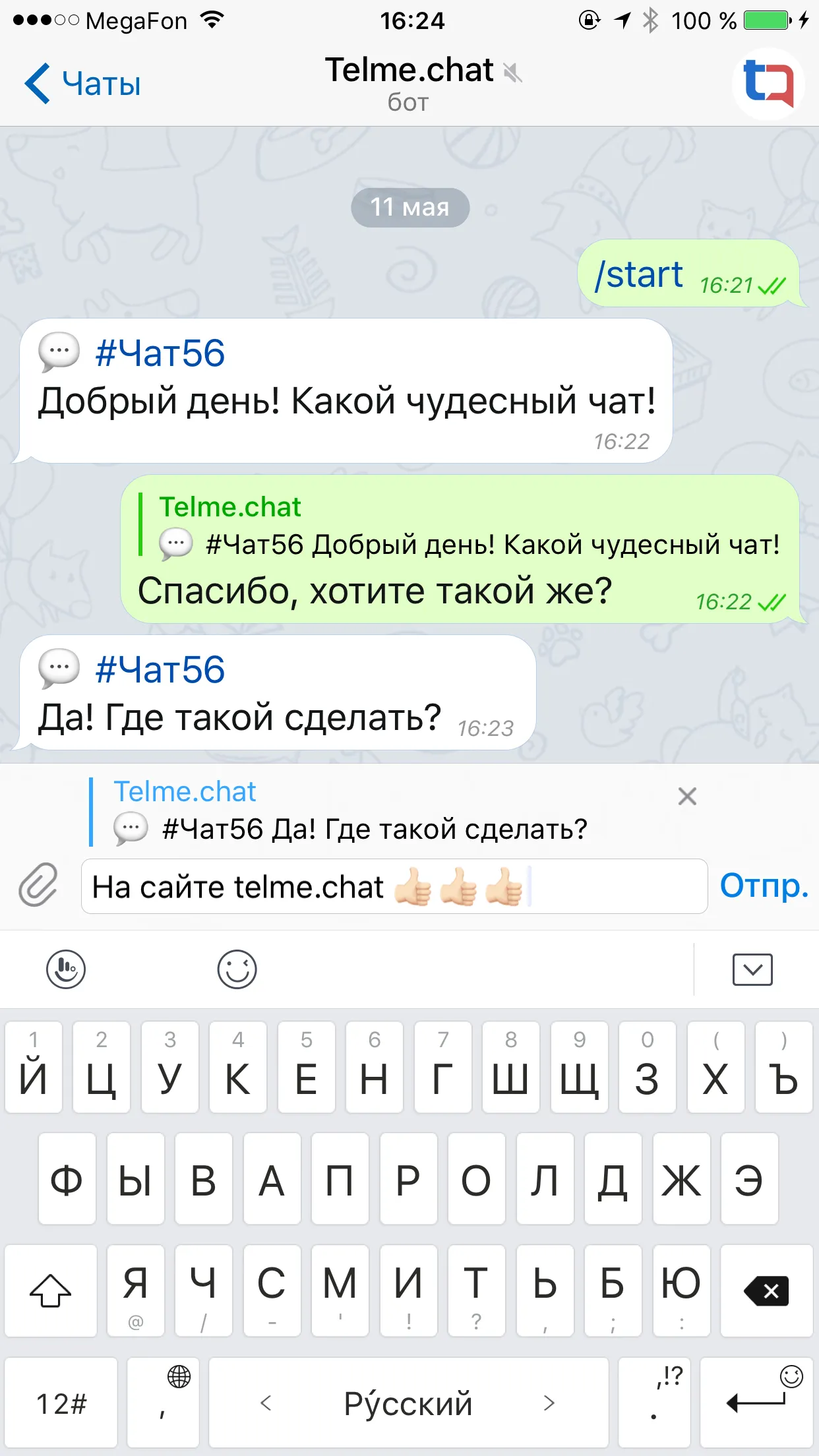
The chat widget itself looked clean and modern. Visitors typed a message, it went to your Telegram bot, you replied, and the answer appeared in the widget in real time. The whole thing was seamless — your customers had no idea you were answering from a beach in Thailand.
The service cost 690 rubles per year (roughly $10 at the time). We had paying customers and the thing was growing. But then Telegram got blocked in Russia in 2018, and that killed the project. When your entire product depends on one platform, and that platform gets banned — well, lesson learned.
Built with React, Node.js, and Telegram Bot API. The widget was a lightweight JS embed, the backend handled message routing between the widget and Telegram.